Small cause – devastating effect:
the gradual destruction of reefs by anchors
Anyone who dives or snorkels on vacation knows the routine: a boat takes you to the reef, anchors there, and brings the passengers back after the excursion. The more exotic the destination, the better.
Often, the boat anchors directly on the reef, damaging a small piece of coral. This is usually not large, approx. 0.5 m², but when you consider how many boats visit a reef every day, the destruction is striking after just a few months and the reef begins to die.
In order to show tourists a living reef, the boats then visit another reef and the creeping destruction begins all over again.
Translated with DeepL.com (free version)
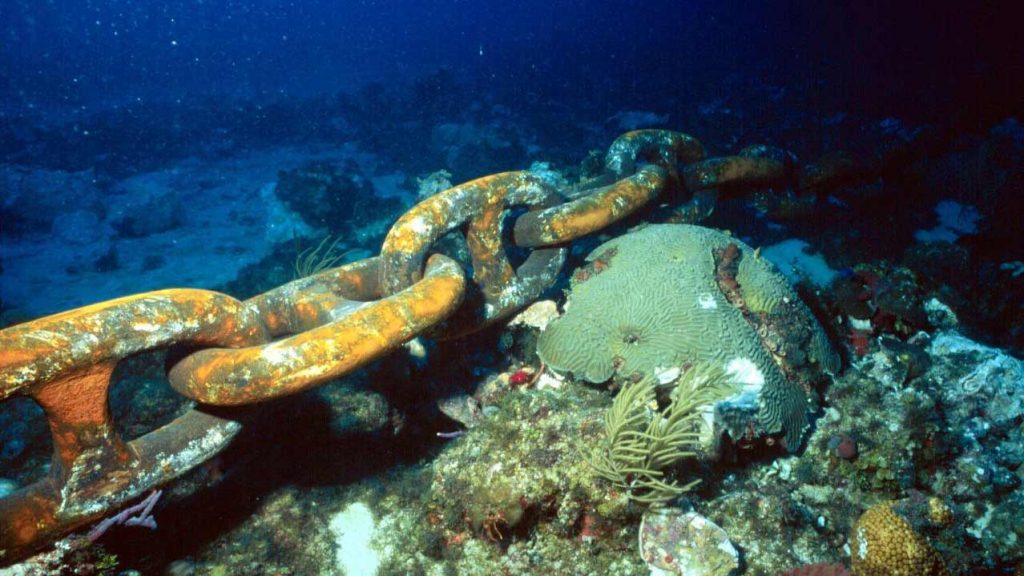
Damage caused by anchor chains (Lombok 2016)
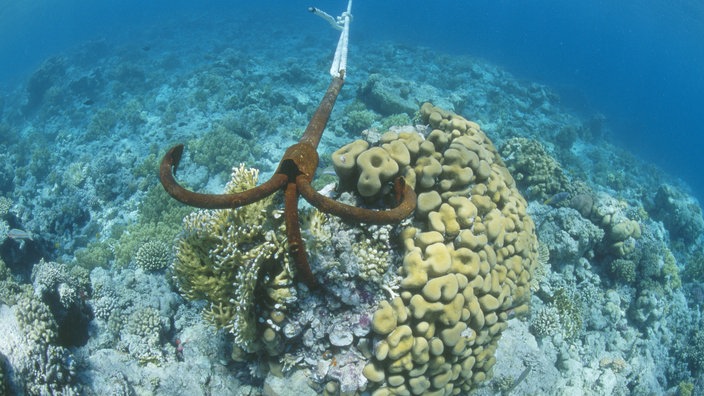
Boats anchored in reefs (Bali 20125)
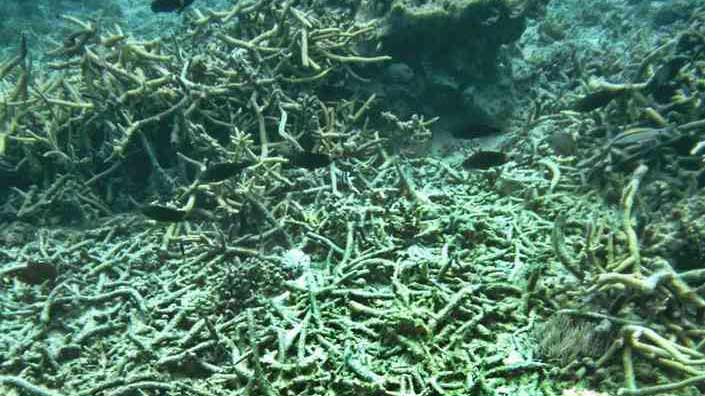
Reef damage caused by wild anchoring (Gili 2024)
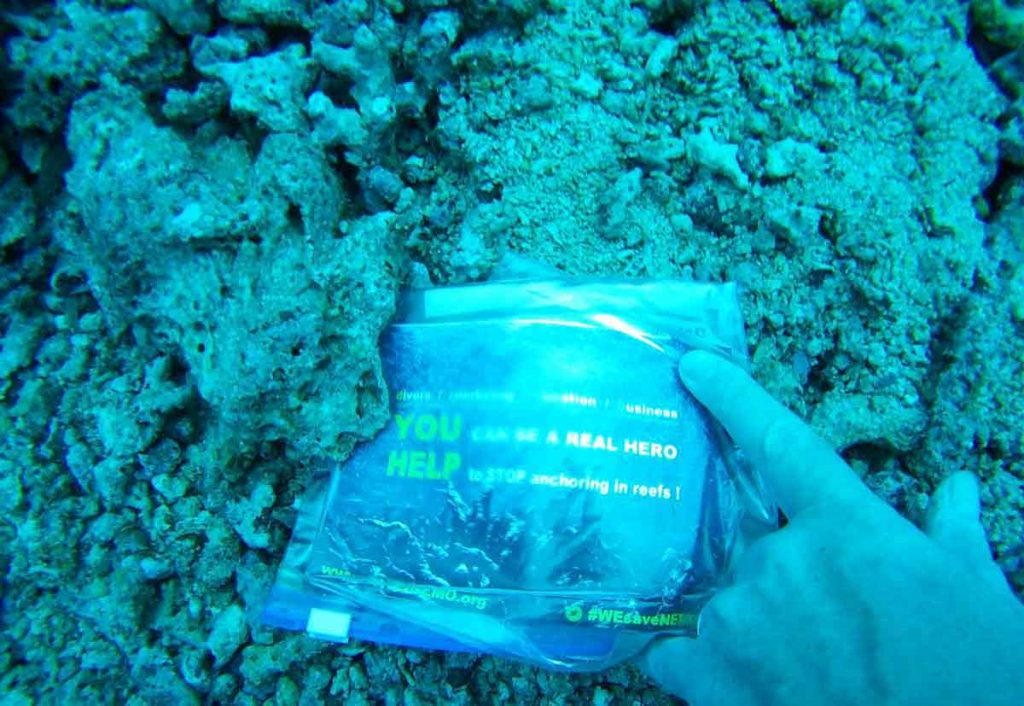
Damage caused by anchor chain (Sulawesi 2023)
There is no exercise better for the heart than reaching down and lifting our oceans up.
Moorings: providing a pragmatic solution
Fixed anchor point for boats directly on the reef
We do not wish to condemn the local operators of these excursions. In many cases, they are unaware of the problem, and the economic necessity of feeding their families is their primary concern. Save Nemo e.V. has developed a system that can be implemented with local diving schools and boat rental companies. It is characterized by speed, sustainability, and cost-effectiveness.
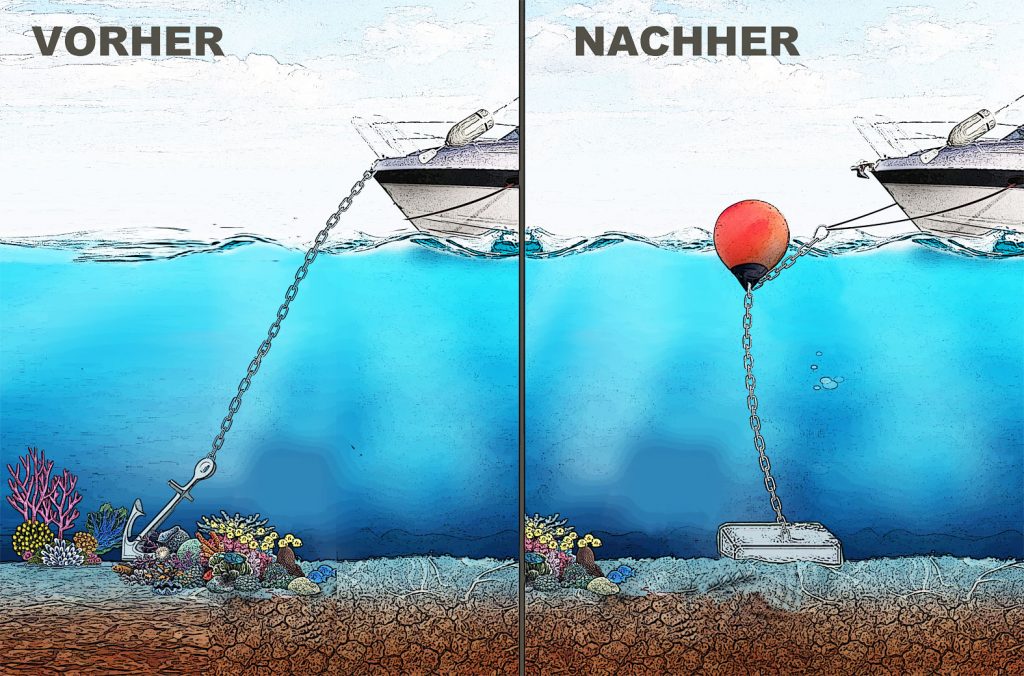
In particularly affected areas in Asia, we have been setting up anchor points for boats on the reef for years. These anchor points are called moorings. They allow boats to moor here without having to drop anchor.
This measure has the advantage of saving boat operators time and protecting the underwater flora and fauna in a sustainable, effective, and fast manner. The installation of these moorings is free of charge. In addition, there are only costs of approximately €50 and the cost of the boat charter.
The positive results show that the measures to regenerate the reefs are successful.
We cordially invite you to participate in our project. Vacationers, divers, as well as other diving schools, travel providers, and local hotels.
Your support in the form of a donation is crucial to cover the costs of chartering boats and materials and to ensure the continuous work of the association.

Anchor buoys are an effective solution

Finished anchor point

Broken anchor chains are removed
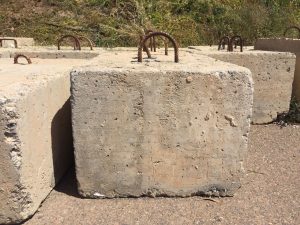
Mooring shortly before deployment
Nemo-Pi: We make anchor points “smart”
Intelligentes Add-On für unsere Moorings
Our Nemo-Pi data buoy makes your underwater environment smart!
Either solar-powered + GSM module with a range of several kilometers or locally in your own Wi-Fi:
The Nemo-Pi reliably transmits your water quality data and analyzes it.
With the Nemo-Pi, you can check the water conditions on site immediately. Live.
Whether it’s suspended solids, oxygen, or conductivity… our sensors have passed long-term testing in the oceans for over a year, reducing maintenance to a minimum.
Education: see – recognize – act
“Knowledge is power,” as Francis Bacon once said.
In addition to actively protecting our coral reefs, we believe it is important to raise awareness about the preservation of our oceans—the rainforests of the seas. We are happy to organize seminars for young and old, beach cleanups, and educational snorkeling trips to show how humans can coexist harmoniously with underwater flora and fauna.
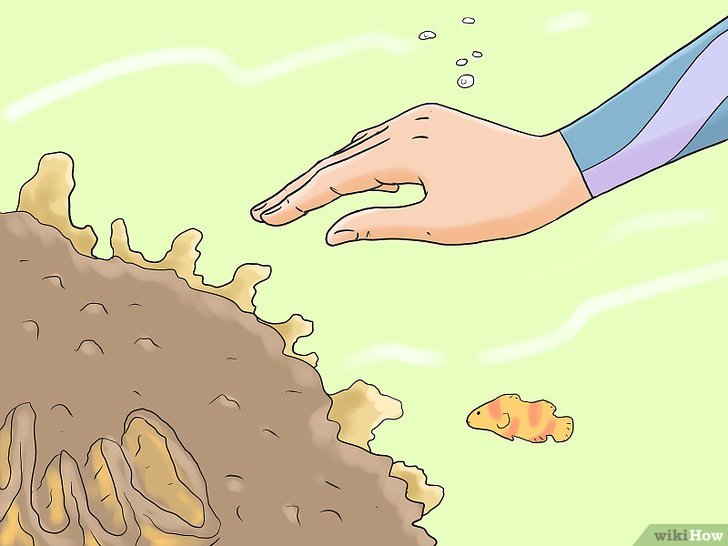
1) Avoid kicking or touching a coral reef.
Attacking your boat against a coral reef can cause serious damage. Be aware of where a coral reef is, so your boat can not even crash. People can destroy coral reefs by simply touching them!
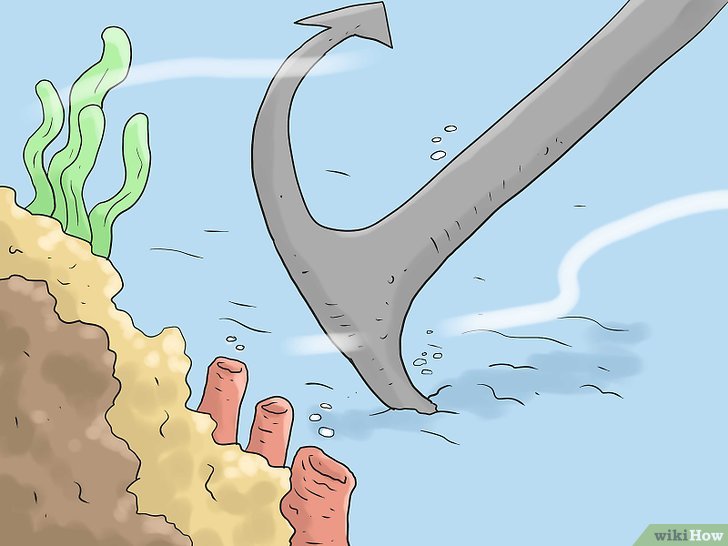
2) Do not anchor in reefs!
Contact with things like anchors or fishing nets is one of the most important factors that reefs suffer from. So don’t do it!
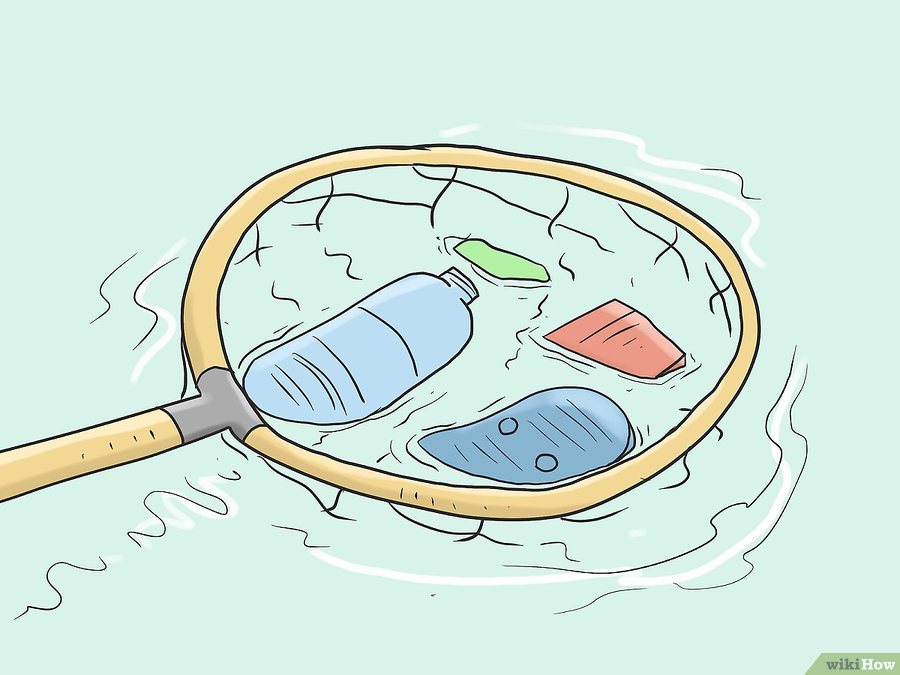
3) Do not throw any waste at the beach or ocean.
Garbage on the beach can damage coral reefs and nemo. Through tides and currents, your waste is becomes the so-called microplastic – deadly for Nemo.
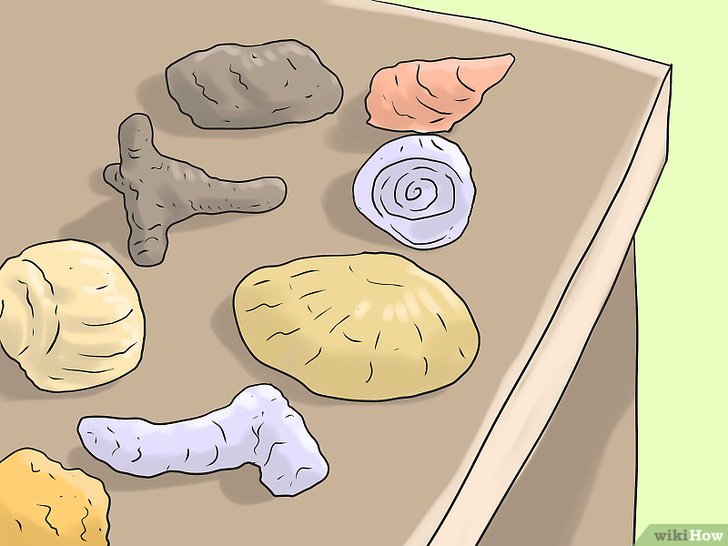
4) Do not purchase souvenirs from coral.
You should not take anything living from the ocean nor buy it in the shop. In some countries, there are jewelry and other souvenirs made from coral. Do not buy them.
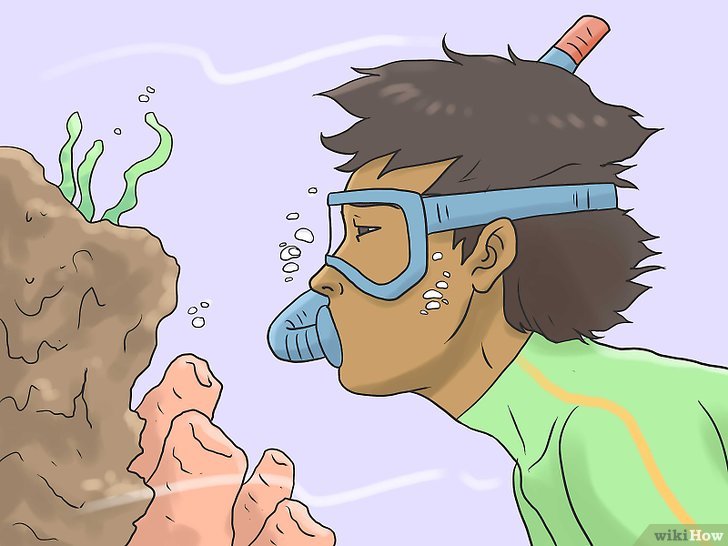
5) Be careful during snorkeling, swimming and diving.
Many people like to snorkel near coral reefs because of their unique beauty. Snorkelers and divers can also cause great damage to coral reefs, especially in areas with many tourists.
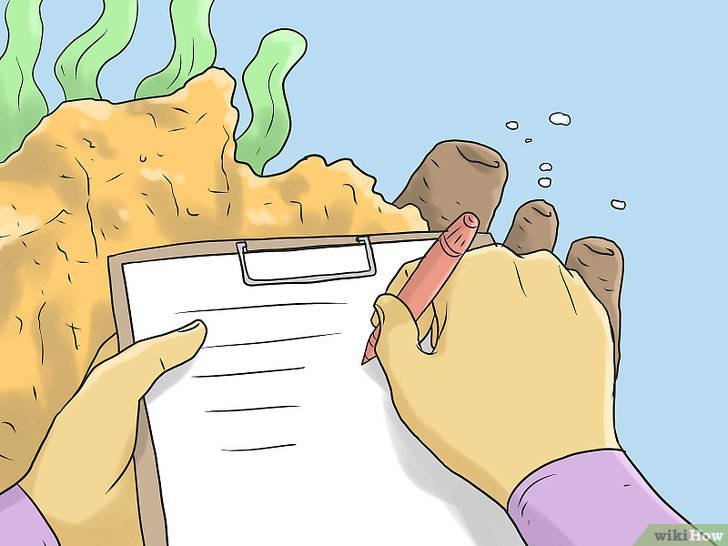
6) Active help!
Save- Nemo is a non-profit organization. You can help us by publicizing our website but also with donations.
Research, industry, and commerce
Customized on-site solutions for reef protection.
We are here for you, helping to preserve coral reefs and our oceans with targeted measures.
Three billion people live and benefit directly or indirectly from clean and intact underwater flora and fauna. Our team of experts develops suitable solutions for you on site to preserve this unique underwater world. Get in touch with us!
our customers:
CHANGE A LIFE TODAY
Our Supporters
K-Visions Herford

www.k-visions.com
Borgward Germany

Beach Club Herford

Reefcalender
Raspberry Pi

NoFearDiving

https://nofeardiving.com
magmarworks

Meltwater

Windy.com

https://www.windy.com

https://www.google.org/
Elegoo

https://www.elegoo.com